Small Apartment Furniture Scale: Why Lots of Tiny Pieces Can Look Worse
When you move into a small apartment, buying smaller furniture sounds like the obvious answer. A petite sofa, a narrow table, a few compact chairs, and several little storage units should leave the room feeling open, right?
Not always. Too many small pieces can create a cluttered look, interrupt the eye, and make a room feel more crowded than a carefully chosen larger piece would. In a compact home, the goal is not to make every item as small as possible. It is to balance scale, visual weight, and usable floor space—while making sure everything can actually get through the door.
Before talking about sofas, measure the doorway. Then measure the route from the building entrance to the room: hallways, elevators, stair turns, and any tight corners. A piece that fits the living room on paper is not useful if it cannot get inside.
Why Lots of Tiny Pieces Can Make a Room Feel Smaller
Every furniture item takes up more than its footprint. It also adds edges, legs, surfaces, and visual information for your eye to process. A room with a small sofa, two occasional tables, a narrow bookcase, separate media stand, storage cube, and several chairs may have plenty of petite pieces—but together, they can make the room feel busy.
More pieces create more visual stops
When furniture is scattered around a small room, the eye keeps stopping at each separate object. The result can be a choppy layout rather than a calm, connected space. Even if the pieces are individually small, their combined visual weight can make the room seem full.
Small pieces compete for the same floor space
Floor space competition is not only about whether furniture technically fits. It is also about whether people can move comfortably between pieces. Several small tables or cabinets may leave narrow gaps that are awkward to walk through, vacuum, or use every day. A larger, more purposeful piece can sometimes take up less functional space because it replaces several scattered items.
Too many short pieces can weaken the room’s shape
A mix of low stools, short shelves, tiny tables, and small storage units may leave the room feeling visually fragmented. A few pieces with compatible heights and proportions can make a compact space feel more intentional. That does not mean every item must match. It means each piece should have a reason to be there.
Measure the Apartment Before Choosing Furniture
Start with the room, not the shopping cart. Measure the walls, ceiling height, windows, door swings, closets, radiators, built-in shelves, and any other features that affect where furniture can go. Note outlets and lighting locations too, especially if a sofa or cabinet could block access.
Use a simple floor plan, even if it is only a sketch. Mark fixed features first, then test furniture sizes. You can use graph paper, a room-planning app, or painter’s tape on the floor to outline possible footprints. The point is to see the layout before you commit.
Measure the route in, not just the room
In apartment buildings, access checks matter as much as room dimensions. Measure the furniture and the full route it must travel. Check:
- Apartment entry and interior door widths and heights
- Hallway width, length, and any sharp turns
- Elevator door opening and interior dimensions
- Stair width, landings, and ceiling clearance
- Building rules for move-in times, elevator reservations, and protective coverings
Compare those measurements with the item’s width, height, and depth. For sofas, include the diagonal measurement and confirm whether legs or cushions can be downsizing furniture for renters removed. Do not rely on “it will probably fit.” A tape measure is much cheaper than a failed delivery or a damaged wall.
Choose Scale, Not Just Small Dimensions
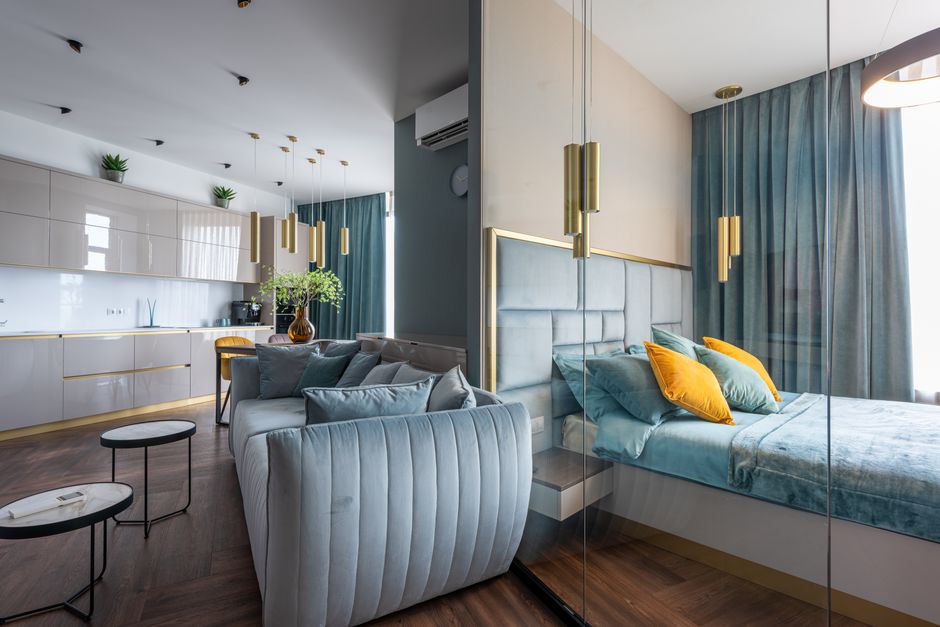
Scale describes how a piece relates to the room and to the other furniture in it. A compact apartment can accommodate a substantial-looking item if it is proportioned well and does useful work. Conversely, a tiny piece can look awkward if it is too low, too narrow, or visually disconnected from everything around it.
For example, one appropriately sized sofa may anchor a living room better than a short loveseat surrounded by extra chairs and tables. A dining table sized for everyday use may be more practical than a tiny table that forces you to add a separate desk for meals or work.
Think about visual weight
Visual weight is how heavy or prominent a piece appears, regardless of its actual weight. A dark, solid cabinet with thick sides may feel heavier than a lighter-colored table with slender legs. A bulky armchair can dominate a room even if its footprint is modest.
When a room already feels crowded, consider pieces that keep sightlines open: visible legs, open shelving used sparingly, lighter finishes, and simple silhouettes. These details do not magically add square footage, but they can make the space feel less blocked.
Use fewer pieces that do more
In a small home, a piece that serves more than one purpose can reduce clutter. Look for a dining table that can also serve as a work surface, an ottoman with storage, or a sofa table that provides useful storage without adding a separate cabinet. Multifunctional does not mean buying every convertible item available. It means choosing pieces that fit your real routine.

Use a Keep, Store, Sell or Donate, Replace Test
Moving is a natural moment to decide whether each item deserves space in the next home. Do not keep a piece simply because it came with you through the last move. Owning furniture is not the same as needing it.
- Keep it if it fits the room, supports your daily routine, and is in good condition.
- Store it if it has real future value, you have a clear reason to hold on to it, and storage costs make sense.
- Sell or donate it if it is useful but no longer works for your space, style, or needs.
- Replace it later if the apartment’s layout is unfamiliar or you are unsure about the right size.
Replacing furniture later is often better than buying something in a hurry before move-in. Live in the apartment long enough to notice how you use the room, where sunlight falls, and which pathways need to stay open. Then shop with measurements in hand.
Ask these questions before moving a piece
- Do I use it regularly, or am I keeping it out of habit?
- Does it fit the apartment’s measurements and the route in?
- Does it solve a specific problem, or does it create another surface to fill?
- Will it block a doorway, window, closet, outlet, or comfortable walking path?
- Could one better-scaled piece replace several smaller ones?
- Would waiting to buy a replacement help me make a better choice?
Simple Layout Principles for a Less Cluttered Look
Protect clear walking paths
Start by drawing the paths you need for everyday movement: from the entry to the kitchen, from the sofa to the balcony, or around the bed. Then place the essential furniture without blocking those routes. A room can contain the right amount of furniture and still feel crowded if the path through it is awkward.
Group related pieces
Keep seating and tables working together rather than spreading small items around the perimeter. A coordinated seating area may feel calmer than several independent chairs and surfaces scattered across the room. Grouping helps the eye read the furniture as one purposeful zone.
Leave some open space
Empty floor is not wasted floor. It makes the apartment easier to move through and gives the furniture room to breathe. Do not fill every corner simply because it is available. A clear corner can make the whole room feel more spacious than one more shelf or chair would.
Be selective with storage
Small storage pieces are tempting because they seem easy to tuck in. But too many can multiply visual clutter. First decide what needs to be stored and where it is best accessed. Then choose a limited number of appropriately sized solutions instead of accumulating containers that each solve only a fraction of the problem.
A Practical Order for Furnishing a Small Apartment
A measured plan keeps furniture decisions simple and reduces the chance of costly mistakes. Use this order:
- Measure the apartment and note fixed features.
- Measure doors, hallways, stairs, and elevators along the route in.
- List the furniture you already own and record its dimensions.
- Sort each item into keep, store, sell or donate, and replace later.
- Place essential pieces on a floor plan or test their footprints with painter’s tape.
- Check walking paths, door swings, and access to windows and storage.
- Move in, observe how the rooms function, and buy only what is still missing.
The Bottom Line
Small apartment furniture scale is not a contest to find the tiniest possible version of everything. Too many petite pieces can create a cluttered look, add visual weight through repetition, and increase floor space competition. A few well-chosen items, sized for the room and the https://dlf-ne.org/how-to-create-a-floor-plan-before-moving-day-without-fancy-software/ way you live, often make a compact home feel more organized and comfortable.
Measure the apartment first. Measure each piece and its route in. Keep what earns its place, store only what is worth storing, sell or donate what no longer fits, and wait to replace uncertain items until you understand the space. “It will probably fit” is not a plan—and in an apartment building, it can become a very expensive guess.